+And the answer is ...
WIFI
Does one really need a University degree to make a mark or live their lives? Let's challenge the perspective that a university degree is essential. For those who went to university, listening to professors with limited work experience discussing theories instead of the real world can sometimes feel irksome, a big waste of money. That being said, we'd still prefer our doctors to be degree-certified, since rules are hardly ever universal. If we were to come across a naturally gifted, self-taught doctor, who knows? We may just put our faith in them.
To underscore our point, we'll be citing examples of ordinary celebrities without a degree. You be the judge of whether their lack of education inhibited their ability to outshine a majority of educated engineers or scientists in path-breaking accomplishments. In the end, it's worth acknowledging that even the educated elite, us included, can learn from those without degrees. After all, changing the world isn't an exclusive privilege of the academically certified.
To underscore our point, we'll be citing examples of ordinary celebrities without a degree. You be the judge of whether their lack of education inhibited their ability to outshine a majority of educated engineers or scientists in path-breaking accomplishments. In the end, it's worth acknowledging that even the educated elite, us included, can learn from those without degrees. After all, changing the world isn't an exclusive privilege of the academically certified.

+Let's be honest
You have to learn by doing it. I couldn’t have come to this place without going through the growing pains.
//
Jessica Alba
Let’s set the stage with Jessica Alba.
She became a bona fide starlet with her breakout role in the short-lived sci-fi series *Dark Angel*, created by James Cameron, the same director behind 'Avatar', 'Titanic', and 'Terminator'. Her beauty and screen presence have kept her in the public eye for nearly four decades, even if, like most actors, she has had her share of duds along the way.
But this is not about her acting career.
There is another side to Jessica that is far more revealing: her ability to change direction when reality demanded it.
In 2008, while pregnant, she developed a rash and hives simply from pre-washing baby shower gifts. The reaction was not new, she had experienced similar sensitivities as a child. This time the stakes were higher. If these everyday products were harming her, what might they do to her unborn child? Why were they still sitting on store shelves?
She started investigating. What she found was a regulatory gap that dated back to the 1976 Toxic Substances Control Act, a law that allowed many chemicals to remain in household products with little rigorous testing. When she looked for safer alternatives, the market was essentially empty.
Most people would have stopped at frustration. Jessica did not.
She spent years researching safer chemical compounds, working with experts, and building products from the ground up. The result was The Honest Company and, most notably, Honest Diapers designed for children with sensitive skin. She did not price them as luxury items for the affluent. She made them competitive with mainstream brands so ordinary families could actually buy them.
The company has faced competition and the impact of the pandemic. Its valuation has fluctuated, and Jessica no longer holds the majority share. Yet it still generates hundreds of millions in online sales every year while delivering non-toxic products to millions of households.
Jessica Alba’s story is not primarily about celebrity or even entrepreneurship. It is about the capacity to notice a real problem, leave the familiar path, and build something better when the existing system offered nothing.
People without traditional university credentials can still change industries. They just have to be willing to change themselves first.
But this is not about her acting career.
There is another side to Jessica that is far more revealing: her ability to change direction when reality demanded it.
In 2008, while pregnant, she developed a rash and hives simply from pre-washing baby shower gifts. The reaction was not new, she had experienced similar sensitivities as a child. This time the stakes were higher. If these everyday products were harming her, what might they do to her unborn child? Why were they still sitting on store shelves?
She started investigating. What she found was a regulatory gap that dated back to the 1976 Toxic Substances Control Act, a law that allowed many chemicals to remain in household products with little rigorous testing. When she looked for safer alternatives, the market was essentially empty.
Most people would have stopped at frustration. Jessica did not.
She spent years researching safer chemical compounds, working with experts, and building products from the ground up. The result was The Honest Company and, most notably, Honest Diapers designed for children with sensitive skin. She did not price them as luxury items for the affluent. She made them competitive with mainstream brands so ordinary families could actually buy them.
The company has faced competition and the impact of the pandemic. Its valuation has fluctuated, and Jessica no longer holds the majority share. Yet it still generates hundreds of millions in online sales every year while delivering non-toxic products to millions of households.
Jessica Alba’s story is not primarily about celebrity or even entrepreneurship. It is about the capacity to notice a real problem, leave the familiar path, and build something better when the existing system offered nothing.
People without traditional university credentials can still change industries. They just have to be willing to change themselves first.

+Are you smarter or tougher than a farmer?
Nothing works one year. You have to try it multiple years.
//
Howard Buffett
Growing up, my parents were inspirational on many occasions. They served as prime examples of resourcefulness and ingenuity. Their life before immigrating to Canada was steeped in farming, often during times of war. Farming is anything but ordinary. Farmers are a different breed, rough and tough, cleverly crafting out-of-the-box solutions to the challenges they face using whatever technology and materials they can get their hands on. It is a world where frugality is valued and problems are handled directly, whether that means building a structure, repairing agricultural machinery, or fixing plumbing with whatever is available. They also instilled in me the importance of sustainable farming and the respectful treatment of animals.
This brings us to Howard Buffett.
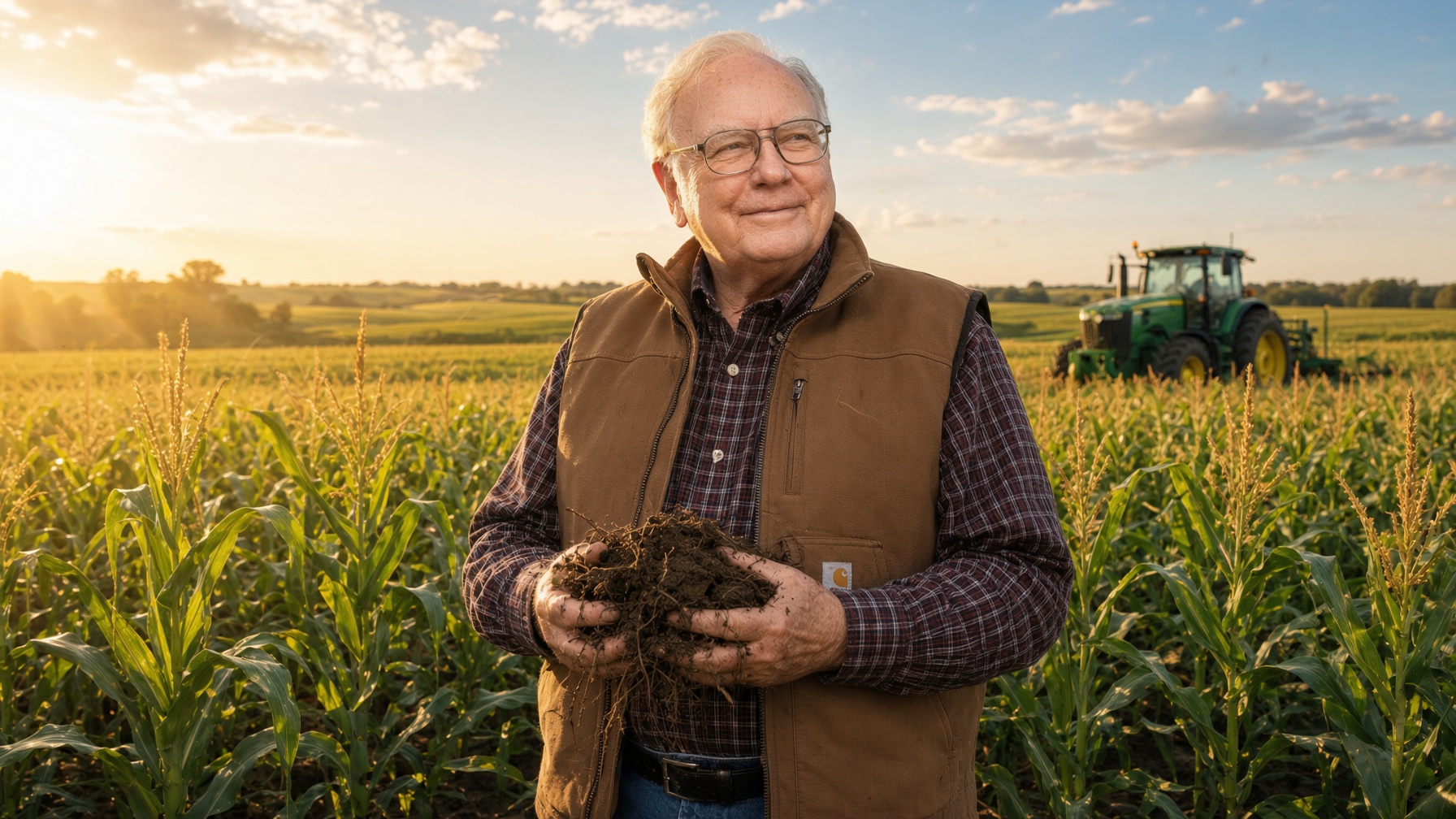
He is the son of Warren Buffett, widely regarded as one of the greatest financial minds of our time and frequently ranked among the world’s richest people. Despite that wealth, Warren has always been known for personal frugality and a refusal to live excessively. Howard, however, chose a very different path. He is a farmer.
Warren never pushed his son toward farming. When Howard wanted to work the land and had no capital, his father simply bought farmland and rented it to him at market rates, classic Buffett discipline, not a free handout. Howard chose the harder road: the one with real weather, real soil, real equipment breakdowns, and immediate consequence, season after season.
Critics sometimes dismiss him as uneducated because he lacks a traditional university degree. Yet his practical observations and hands-on experience have placed him in one of the most consequential fields there is the one that determines the food we eat. Howard has developed and promoted conservation agriculture methods aimed at sustaining soil health without heavy reliance on fertilizers and pesticides. These approaches show real promise.
He grows corn and soybeans on his farm near Decatur, Illinois, and uses both his knowledge and resources through the Howard G. Buffett Foundation to advance sustainable agricultural techniques around the world.
Yes, he had access to conversations and guidance most of us will never have. That does not change the core fact: at heart, Howard Buffett remains an unpretentious farmer whose practical intelligence and willingness to operate under real consequence are transforming the field he chose.
Farmers do not get to hide behind slides or committees. When the plan breaks, the feedback is immediate. That is where real judgment is forged.
This brings us to Howard Buffett.
He is the son of Warren Buffett, widely regarded as one of the greatest financial minds of our time and frequently ranked among the world’s richest people. Despite that wealth, Warren has always been known for personal frugality and a refusal to live excessively. Howard, however, chose a very different path. He is a farmer.
Warren never pushed his son toward farming. When Howard wanted to work the land and had no capital, his father simply bought farmland and rented it to him at market rates, classic Buffett discipline, not a free handout. Howard chose the harder road: the one with real weather, real soil, real equipment breakdowns, and immediate consequence, season after season.
Critics sometimes dismiss him as uneducated because he lacks a traditional university degree. Yet his practical observations and hands-on experience have placed him in one of the most consequential fields there is the one that determines the food we eat. Howard has developed and promoted conservation agriculture methods aimed at sustaining soil health without heavy reliance on fertilizers and pesticides. These approaches show real promise.
He grows corn and soybeans on his farm near Decatur, Illinois, and uses both his knowledge and resources through the Howard G. Buffett Foundation to advance sustainable agricultural techniques around the world.
Yes, he had access to conversations and guidance most of us will never have. That does not change the core fact: at heart, Howard Buffett remains an unpretentious farmer whose practical intelligence and willingness to operate under real consequence are transforming the field he chose.
Farmers do not get to hide behind slides or committees. When the plan breaks, the feedback is immediate. That is where real judgment is forged.
+What is success?
It is not the strongest of the species that survives, nor the most intelligent, but the one most adaptable to change.
//
Steve Jobs, Bill Gates, Mark Zuckerberg
We understand that the next four examples are often dismissed as rare. Or are they?
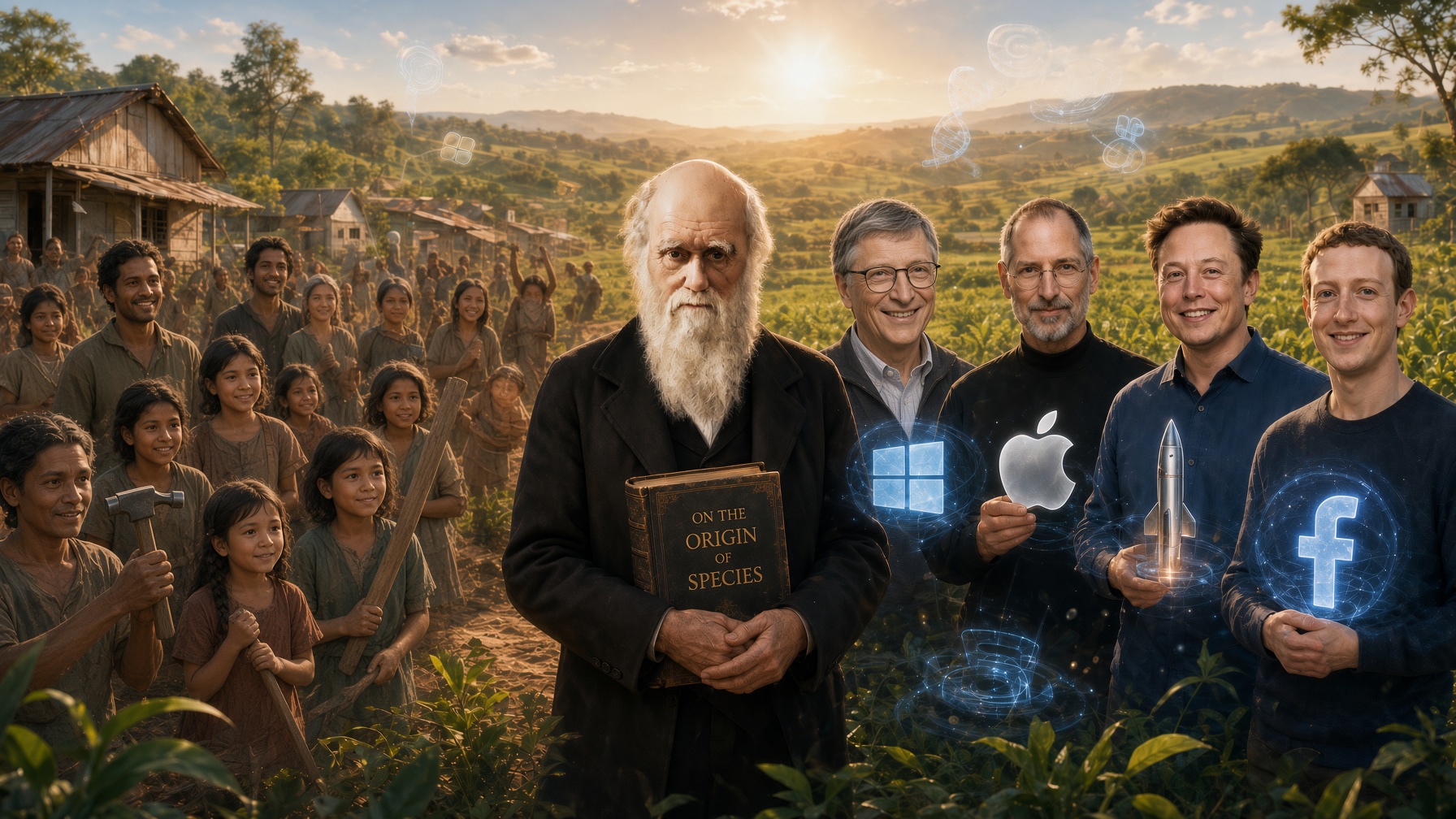
Most of us know that Bill Gates, co-founder of Microsoft, and Steve Jobs, co-founder of Apple, never finished university. Elon Musk is largely self-taught. Mark Zuckerberg left Harvard to build Facebook. Full profiles of these people are unnecessary, their stories have been told countless times. The usual response from the “you must get a degree” crowd is that these are rare exceptions. But look closer.
Most immigrants and refugees who arrive seeking a better life do not have a university degree. Many do not even have a high school diploma. Plenty lack fluent language skills when they start. Yet a significant number of them still build better lives for themselves and their families through sheer will, work, and adaptability. You do not need billions to improve your life. You do not need people like me repeating these stories either.
In the larger picture, Charles Darwin’s ideas of evolution and sexual selection center on survival. Most living things push to survive or to leave something of themselves behind. That is not an iron law, it is a theory that comes close to describing reality. From a human perspective, survival also means making a positive impact on someone else’s life, large or small. It could be your children, a partner, a colleague, or a stranger. That impact becomes your legacy. It contributes to the continuation and improvement of the people around you. No university degree is required for that. And in the end, that may be the clearest measure of a life well lived.
Most immigrants and refugees who arrive seeking a better life do not have a university degree. Many do not even have a high school diploma. Plenty lack fluent language skills when they start. Yet a significant number of them still build better lives for themselves and their families through sheer will, work, and adaptability. You do not need billions to improve your life. You do not need people like me repeating these stories either.
In the larger picture, Charles Darwin’s ideas of evolution and sexual selection center on survival. Most living things push to survive or to leave something of themselves behind. That is not an iron law, it is a theory that comes close to describing reality. From a human perspective, survival also means making a positive impact on someone else’s life, large or small. It could be your children, a partner, a colleague, or a stranger. That impact becomes your legacy. It contributes to the continuation and improvement of the people around you. No university degree is required for that. And in the end, that may be the clearest measure of a life well lived.